
What Is an EMF Meter and How Do You Use One?
Originally published · Updated
Survival HUB

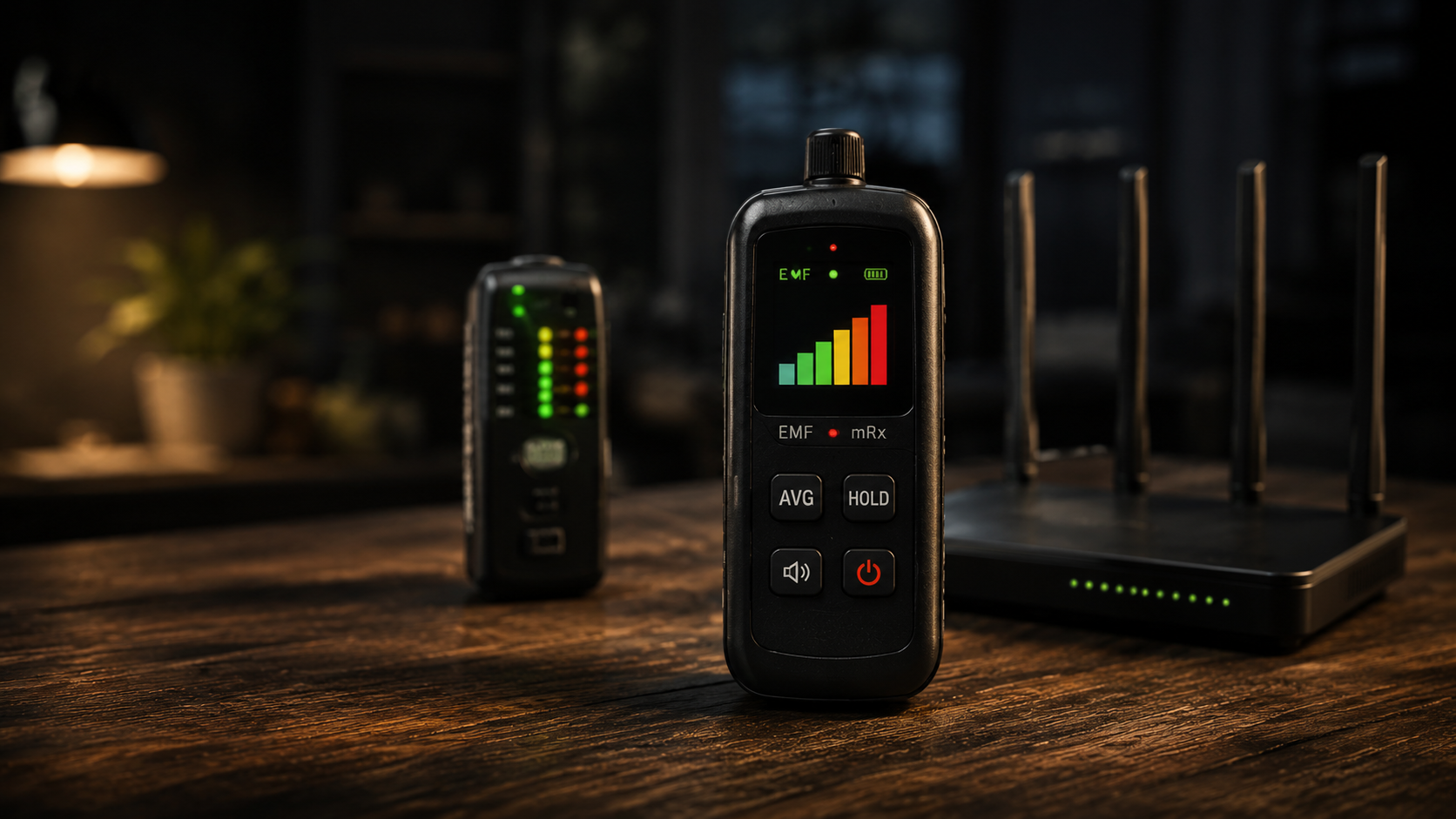
An EMF meter is a handheld device that measures electromagnetic fields in a given environment. It tells you what types and levels of electromagnetic radiation are present, from the low-frequency fields produced by wiring and appliances to the high-frequency radio waves from Wi-Fi routers and mobile phone towers.
This article explains what EMF is, what different meter types measure, and how to use one practically.
What Is EMF?
EMF stands for electromagnetic field. All electrical devices produce them. So do natural sources — the Earth itself has a magnetic field, and the sun emits a broad spectrum of electromagnetic radiation including visible light, ultraviolet light, and infrared.
The spectrum is typically divided into two categories:
Non-ionizing radiation — lower frequency, not energetic enough to break chemical bonds. This includes:
Extremely low frequency (ELF): produced by power lines, home wiring, and appliances
Radio frequency (RF): Wi-Fi, Bluetooth, mobile networks, smart meters, radar
Ionizing radiation — high-frequency, energetic enough to break chemical bonds and damage DNA. This includes X-rays and gamma rays. Consumer EMF meters do not measure ionizing radiation.
Most EMF awareness conversations focus on non-ionizing radiation, specifically the radio frequency (RF) range from wireless devices and the extremely low frequency (ELF) range from electrical infrastructure.
Types of EMF Meters
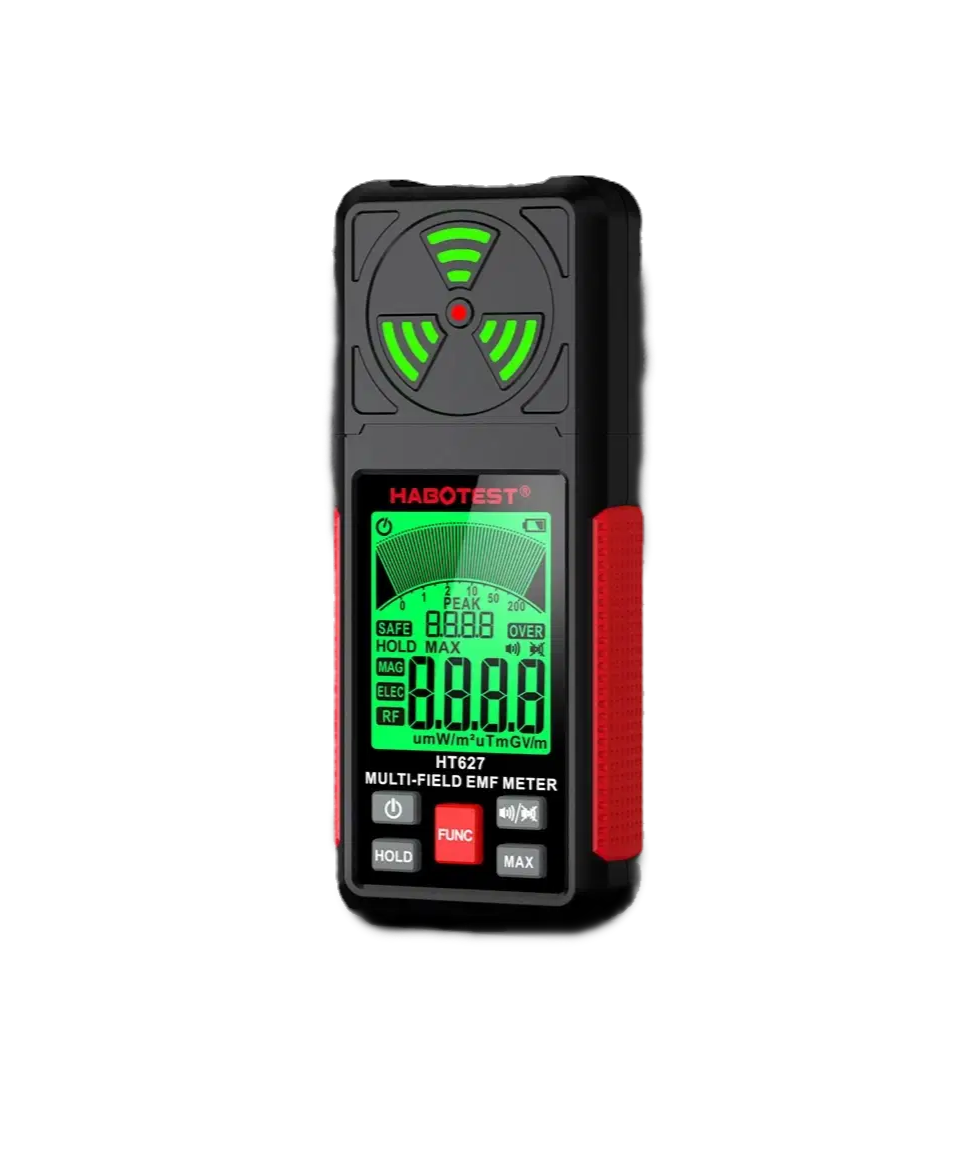
Not all EMF meters measure the same thing. Choosing the right tool depends on what you want to measure.
ELF Meters (Gauss Meters)
These measure the low-frequency magnetic fields produced by electrical current. Common sources include power lines, household wiring, electric motors, and appliances. ELF meters display readings in milligauss (mG) or microtesla (µT).
A basic single-axis gauss meter is the most affordable option. Tri-axis meters measure all three spatial directions simultaneously, giving a more complete picture without requiring the user to rotate the device.
RF Meters (Radio Frequency Meters)
These measure radio frequency and microwave radiation in the gigahertz range — the frequencies used by Wi-Fi (2.4 GHz and 5 GHz), 4G and 5G mobile networks, Bluetooth, and smart meters. RF meters display readings in volts per meter (V/m), milliwatts per square meter (mW/m²), or microwatts per square centimeter (µW/cm²).
RF meters vary significantly in quality. Budget models often have narrow frequency ranges that miss 5G signals. Choose a meter with a documented frequency range, sensitivity and calibration appropriate to the sources you want to measure. A meter covering frequencies up to 8 GHz does not cover millimetre-wave 5G.
Combination Meters
Some devices measure both ELF and RF, plus additional parameters. These are useful for a general survey of an environment without needing multiple instruments.
What the Numbers Mean
Reference levels published by the International Commission on Non-Ionizing Radiation Protection (ICNIRP) and other standards bodies set occupational and general public exposure guidelines. These are the numbers many EMF meters include as reference points.
For context, typical background readings in a modern home are:
ELF magnetic field: 0.1 to 3 mG away from appliances
RF from Wi-Fi router at 1 meter: 0.5 to 5 V/m depending on router power and frequency
Higher readings occur close to the source. A microwave oven produces a strong ELF field while running. A 5G small cell antenna at close range produces higher RF levels than a conventional 4G tower.
Reading an EMF meter without context can be confusing. The goal of a survey is to identify sources, understand the pattern of exposure across a space, and find practical options for reduction.
How to Use an EMF Meter: Step by Step
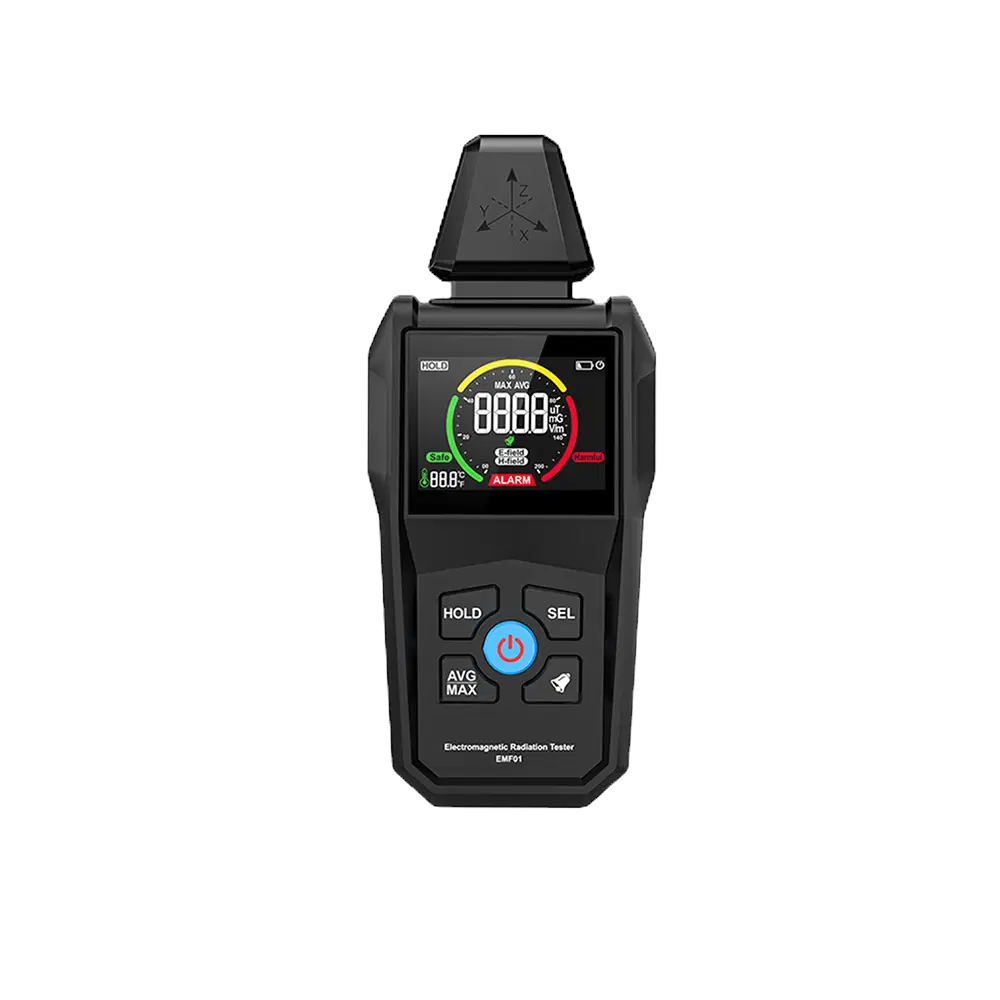
Step 1: Know What You Are Measuring
Decide before you start whether you are surveying for ELF (electrical appliances, wiring) or RF (wireless devices, external sources), or both. Match your meter to the target frequency range.
Step 2: Establish a Baseline
Take a reading in the middle of a room with all electrical devices powered off (or in airplane mode for RF). This is your background level. Any reading significantly above background when a device is active is attributable to that device.
Step 3: Survey the Space
For ELF: walk slowly through the space, holding the meter steady. Move near power outlets, circuit breakers, appliances, and anywhere wiring runs behind walls. Note peak readings and their locations.
For RF: hold the meter still and note the peak reading. RF is directional — rotating the meter or moving it a few feet can change readings substantially. Take readings at multiple points and heights in a room.
Step 4: Identify the Sources
High readings usually have an obvious source nearby. Common sources of elevated readings:
ELF: circuit breaker panels, under-counter appliances, electric ranges, older wiring, fluorescent lighting
RF: Wi-Fi routers, smart meters (often mounted on exterior walls), mobile phones in use, neighboring networks
Step 5: Evaluate Reduction Options
Once sources are mapped, compare readings at different distances. In ideal free-space, far-field RF conditions, doubling distance reduces power density to one quarter and electric field strength to one half. Nearby appliances, reflections and shielding can behave differently, so measure the result rather than applying this rule to every ELF or indoor reading.
Other practical steps for RF reduction include:
Switching Wi-Fi to wired Ethernet where practical
Disabling Wi-Fi and Bluetooth on devices not in active use
Using RF-blocking products where appropriate
For targeted RF shielding — from shielding fabric and EMF-blocking paint to personal protection — the full range of EMF protection options covers everything from meters and detectors to shielding solutions for the home.
Common Mistakes When Using an EMF Meter
Measuring only one spot. EMF varies significantly across a space. A thorough survey takes multiple readings.
Confusing ELF and RF readings. An ELF meter will not show Wi-Fi. An RF meter will not show fields from your wiring. Know what your device measures.
Panicking at any non-zero reading. Background electromagnetic fields are a feature of the modern environment. The purpose of a meter is to identify meaningful sources and make informed decisions, not to find a reason for alarm.
Ignoring meter frequency range. A meter that does not cover 5G frequencies (sub-6 GHz and millimeter wave) will underreport RF from modern mobile networks. Check the specification sheet before purchasing.
Who Uses EMF Meters
EMF meters are used by building biologists, electricians diagnosing wiring issues, individuals assessing their home environment, and researchers studying occupational exposure. They are practical instruments for anyone who wants objective data about the electromagnetic environment of a space.
If you are starting with EMF measurement for the first time, a combination meter covering ELF and RF is the most useful single purchase. A short survey of your main living and sleeping areas will tell you quickly where the significant sources are — and where they are not.
Measurement references
Technical guide: near-field and far-field measurements, section 5. Manufacturer example: specified RF meter frequency range. Always check your own meter’s manual and specifications.